We currently have two main projects: Soil Sense and RainReady Humboldt. Each supports urban farmers and gardeners in strengthening the health of their growing space, enhancing the health of their environment, and leveraging local resources for growing crops.
Soil Sense
Through our Soil Sense program, we provide soil regeneration information and workshops to help community members assess and enhance their growing space. We focus on connecting with farms and gardens in underserved areas to share educational materials on soil health and provide workshops that address their specific needs.
We hold some of these workshops on the ground at farms and gardens, sharing educational literature, tools, and guidance on improving their soil’s health and fertility. By meeting people where they work, we can respond directly to questions about their growing space that arise in the moment, tailoring advice to their needs. In certain cases, we offer workshops via webinar as well.
Additionally, we have created access to resources such as clean soil, mulch, compost, native plants, and cover crop seed to farms and gardens throughout the Chicagoland foodshed. Making these resources accessible supports urban farmers and growers in leveraging soil-regenerating practices, using the tools and knowledge shared in our Soil Sense workshops.
RainReady Humboldt
This project focuses on replacing traditional lawns and green spaces with rain-ready gardens designed to improve biodiversity and strengthen the ecosystem in the Humboldt Park neighborhood. By designing and creating gardens that readily absorb stormwater, this project helps mitigate runoff when flooding occurs. Made up of native plant species, these rain-ready gardens provide vital habitat for local pollinators as well. By promoting water retention in urban soils and resilience in response to climate change, this initiative also enhances the beauty of the places where people live.
Residents can connect with Val this summer in the 26th Ward as she launches the RainReady Humboldt Initiative. Val and her project partner, Estela Duhart, won second place in Alderperson Jessie Fuentes’ 2025 participatory budgeting process. Last year, the 26th Ward allotted $500,000. Installation began in spring 2026 and will continue through late fall.
These gardens bring ecological benefits while also helping build community as neighbors join together to create them. They are low-maintenance and cost-effective, requiring no mowing, watering, or fertilizing. A key feature of rain-ready gardens is their ability to hold water and allow it to slowly infiltrate back into the soil. In urban areas, subsoil is often heavily altered and filled with construction materials and other debris. Rain-ready gardens help recreate water infiltration basins at a small scale, mimicking the natural wetland landscape of the region.
Through this infrastructure, we are strengthening our communities’ ability to adapt to climate change while regenerating their ecosystems. In the process, we’re increasing biodiversity and enhancing the water cycle. Rocks and native plants used in a rain garden create an ideal habitat for wildlife, and residents will soon see native birds and beneficial insects like these fluttering, hopping, or crawling around their rain garden:
- Bees
- Butterflies
- Dragonflies
- Frogs
- Toads
- Turtles
- Native birds like finches and hummingbirds
Soil-improving microorganisms also will make a rain garden their home. Over time, the relationships between these native species will continue growing stronger, enhancing the resilience of the local ecosystem.
Replacing lawns with native plants and pollinator gardens has a ripple effect — not just by building ecological communities, but also by strengthening human ones. As neighbors work together to plan and implement these projects, they foster new connections, share ideas, and realize powerful new ways of continuing to work together in the future.
Rain Garden Installation at the Brookfield Zoo
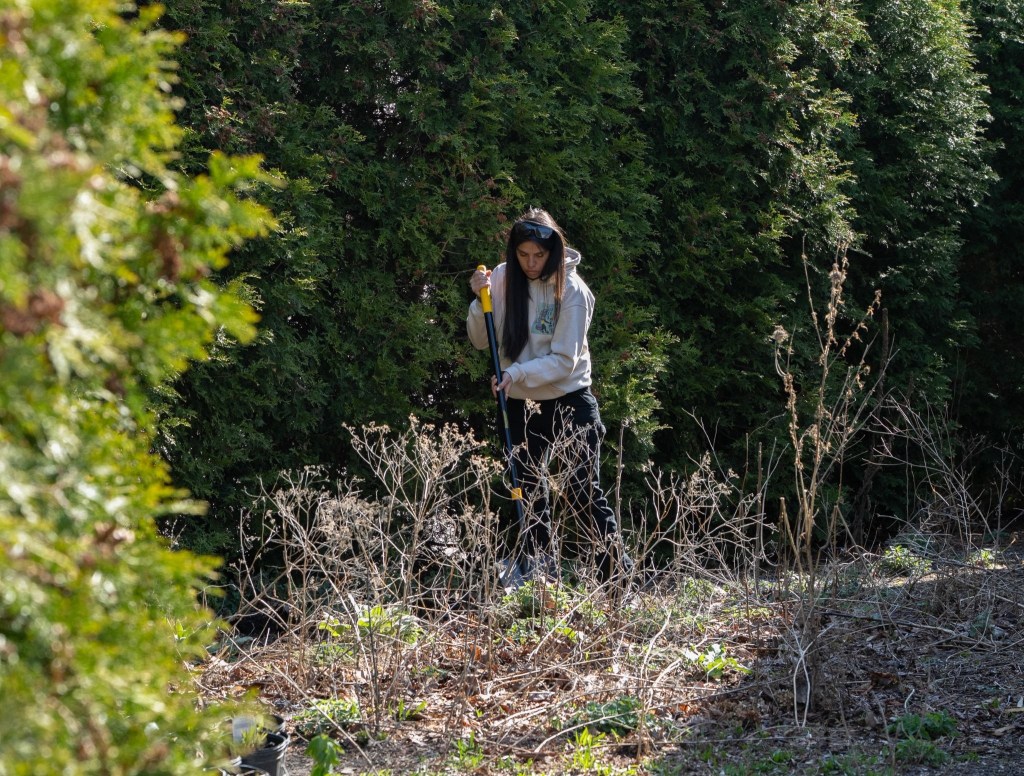
In partnership with the Brookfield Zoo’s King Conservation Academy, we held a two-day workshop for Academy stewards. Participants helped create a rain garden, gaining hands-on experience in rainwater harvesting while learning about promoting water conservation, assessing soil health, fostering nutrient cycling, and increasing local biodiversity with native plants. They also designed and installed a pollinator garden to provide habitat for native species.
_________________________________________
Regional Connections
From Canada to South America, we strive to makeing connections acrossin the western hemisphere. While Suelo Sano is a community organization primarily based inout of Chicago, we also work internationally and nationally because the nurturing roots and waters connect us all. We work alongside other groups throughout our region and hemisphere together to address issues involving around land and water. Read on to learn more about our other projects.
Nurturing Roots
Nurturing Roots is a convergence born through work with land-based communities in Oaxaca, Mexico, and Pine Ridge, South Dakota. Gathering together artists, musicians, poets, filmmakers, and speakers who work in their communities, it engages audiences on land protection and connections to the natural environment. In an era where data centers, extractive industries, water scarcity, and land overuse dominate the local and national news cycles, Nurturing Roots provides an opportunity for people to grow inspired while learning from those committed to protecting the land, water, and life in their communities.
Nurturing Roots centers themes of land rights and rematriation, migration and movement, Indigenous sovereignty, community, cultural revitalization and protection, children’s knowledge, and the impact of today’s choices on future generations. The roots grow deep below the surface, building on our past and celebrating the vast network of connections between individuals grounded in this knowledge.
The Waters Connect Us
All of our water is connected, from flowing surface streams to underground aquifers below us and raindrops falling from the clouds above. Water is precious and finite. The Waters Connect Us is a multigenerational effort that began in the Arizona desert in 2016 and was inspired by Debra White Plume (Oglala Lakota/Cheyenne) and a collective of Indigenous and non-Native peoples committed to protecting water for future generations. Through educational workshops, events, film screenings, and speaker symposiums, the Waters Connect Us collective is dedicated to building and strengthening solidarity between those working in environmental and human rights.
 growing food sovereignty in chicago, together.